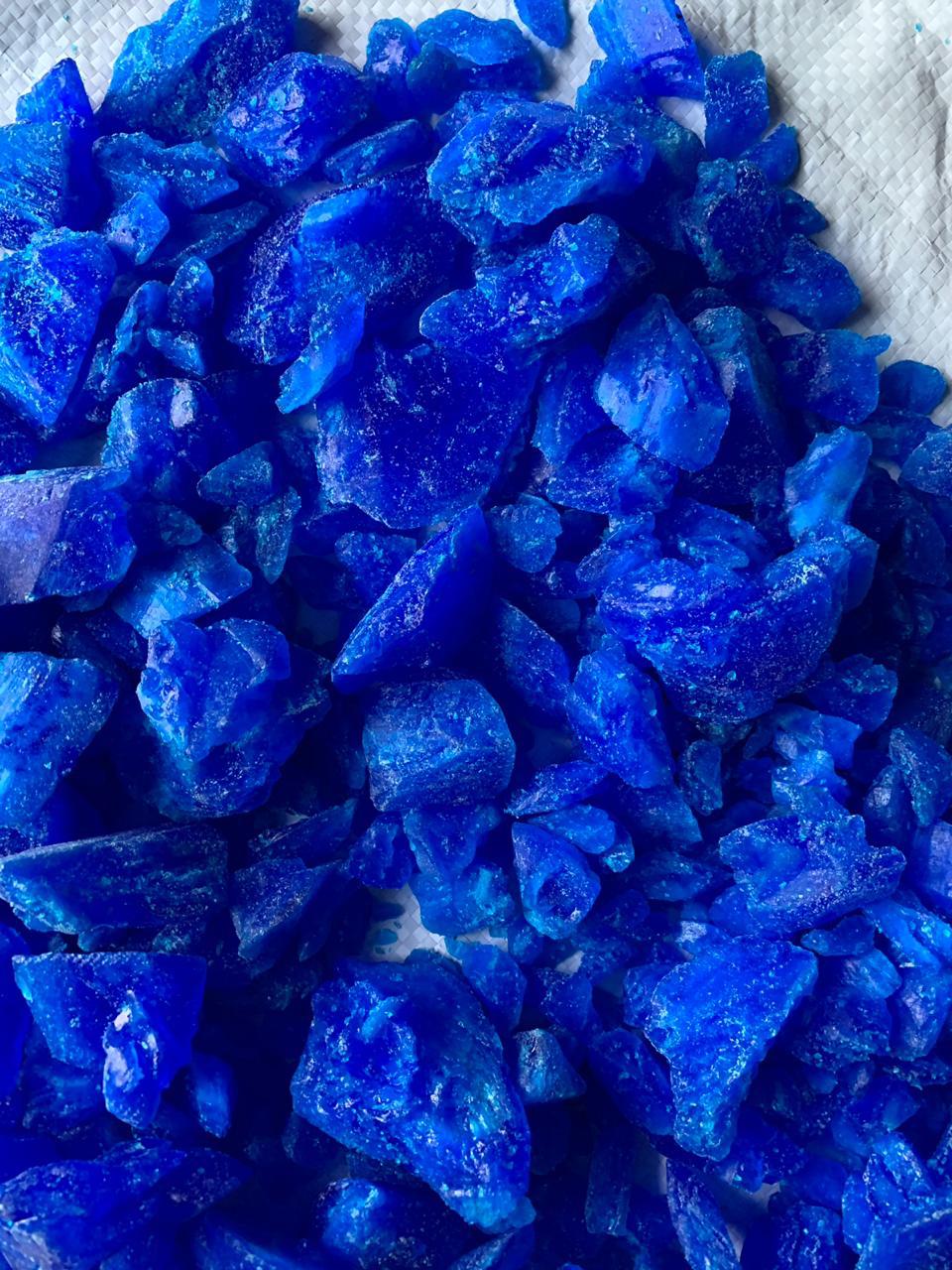
Bordeaux mixture — a combination of Copper Sulphate, hydrated lime and water — has been used to protect crops from fungal and bacterial disease since the late 19th century, and it remains one of the most widely used copper fungicides today.
How It Works
When Copper Sulphate is neutralised with lime, it forms a fine, sticky suspension that adheres to leaf surfaces. As copper ions are slowly released, they interfere with fungal spore germination, giving crops protection against downy mildew, late blight and several bacterial leaf spots before infection takes hold.
Getting the Ratio Right
A traditional Bordeaux mixture is prepared at roughly a 1:1 ratio of Copper Sulphate to hydrated lime, dissolved separately in water before combining — mixing the concentrated solutions directly can cause uneven neutralisation. Farmers should always follow label directions and local agricultural extension guidance for the specific crop and disease pressure involved, since concentration needs vary by crop sensitivity and season.
Application Tips
Spray during dry, calm weather to allow the mixture to adhere and dry on the leaf surface. Avoid application during flowering on sensitive crops, and always test on a small area first when using it on a new variety. Our Agriculture Grade Copper Sulphate is available in both crystal and powder form, sized for tank-mix convenience.